Stormwater Drainage Issues After Heavy Rain in Melbourne: What to Check
Melbourne winters are a good time to get familiar with your stormwater system. Most of the year’s heaviest rain falls between June and August in quick bursts, and that’s when your drainage gets its real test. A system that handles light showers without a hitch can behave quite differently when a proper downpour rolls through. Stormwater drainage problems that have been quietly building tend to show themselves then.
If you’ve noticed water sitting in the yard longer than expected, or heard some gurgling from the drains after rain, this guide is for you.
Here’s what to check if you have stormwater drainage problems, what usually causes it, and how a plumber can help.
Why Melbourne Winters are a Good Test for Stormwater Systems
Melbourne gets the bulk of its annual rainfall between May and October, and a lot of it comes in concentrated bursts. In a short window, your roof, driveway, and paths are all shedding water into the same drainage network.
For a system in good shape, that’s no problem. For one that’s partially blocked or a bit tired from age, you’ll notice.
Plenty of homes across Melbourne’s inner and middle suburbs are sitting on original stormwater infrastructure that’s been doing its job for 50 years or more. Terracotta and older PVC pipes settle and shift over time, tree roots find their way through joints, and sediment gradually builds up in pits. It’s normal wear.
Most systems handle it until a heavier-than-usual rain comes along and gives them a proper test.
Signs of Stormwater Drainage Problems to Watch For
A post-rain walk around the property is one of the better habits a homeowner can develop. You’re looking for:
- Water pooling in low-lying spots in the yard that takes more than a few hours to clear
- Gurgling sounds from stormwater drains or downpipes during or just after rain
- Water overflowing from grates or pits near driveways, paths, or downpipe outlets
- Muddy patches or small erosion channels where water has found its own route
- Damp areas along external walls or near the home’s base
- Downpipes that seem to discharge slowly or back up during heavy rain
Any one of these is worth keeping an eye on. If a few are appearing together after rain, something in the system deserves a closer look.
What Causes a Blocked Stormwater Drain in Melbourne
Blocked stormwater drains in Melbourne are usually the result of gradual buildup rather than one sudden event:
Leaf and debris accumulation
Melbourne’s tree canopy is wonderful, but with it comes a lot of leaf matter through autumn and winter. Gutters and drainage pits pick it up, and over time compacted debris slows the system down noticeably.
Tree root intrusion
Established tree roots follow moisture wherever it leads, which sometimes means into pipe joints. Once a root finds its way in, it grows quickly. This is especially common in older suburbs where both the trees and the pipes have some history.
Pipe deterioration
Terracotta and older PVC pipes do eventually crack or shift. When that happens, water takes a detour rather than following the intended path to the outlet.
Silt and sediment buildup
Rainwater carries fine soil particles that settle in pits and pipes over time. Over years, that gradual buildup reduces the system’s capacity to shift water quickly.
Undersized or outdated pipework
Some older Melbourne homes have drainage that was designed for the property as it was originally built. Extensions, new paving, and larger roof areas can put more load on the system than it was ever sized for.
When to Call a Stormwater Plumber
If the same spot floods after every decent downpour, or you’re regularly clearing overflow from a pit or grate, it’s worth getting a stormwater plumber to take a look. Manually clearing debris is sometimes useful, but it won’t address root intrusion or a settled section of pipe, and those issues tend to come back.
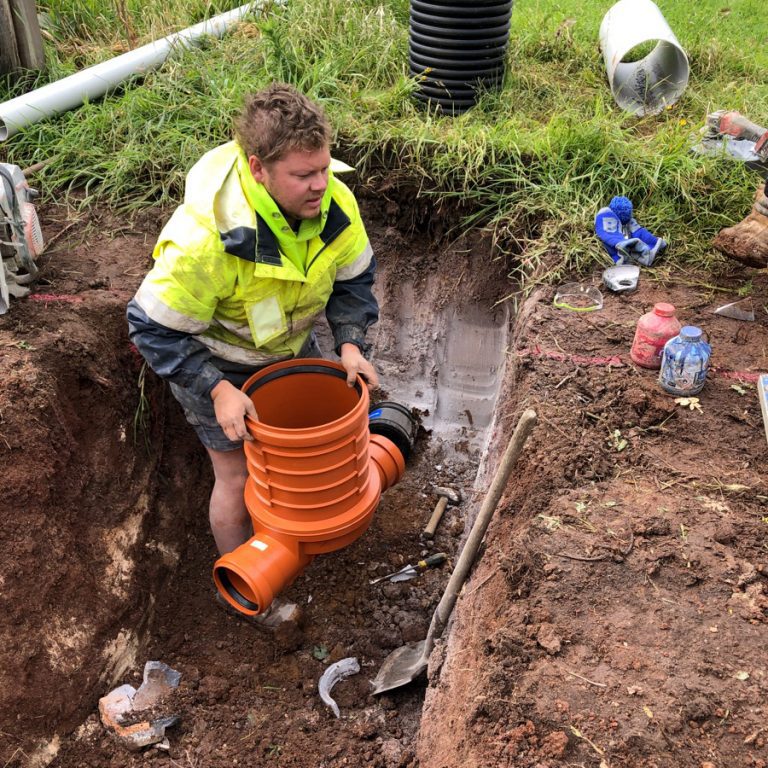
A licensed drainage plumber can use CCTV camera inspection to see exactly what’s going on inside the pipes, clear blockages properly, and let you know whether any repair work is needed.
An inspection is genuinely useful either way, whether it confirms things are fine or turns up something worth fixing.
What a Stormwater Plumbing Actually Covers
A qualified stormwater plumber will generally:
- Check all accessible surface pits, grates, and downpipe connections
- Run a CCTV camera through the pipes to assess internal condition
- Identify root intrusion, cracks, or areas where the pipe has lost its fall
- Flush and clear accessible blockages
- Provide a written report on what they found and what they recommend
For older Melbourne properties especially, a CCTV inspection often turns up things that have been quietly developing for years without any obvious surface signs.
Water Near the Foundation Is Worth Checking Too
If water is sitting close to the base of the house rather than draining away from it, that’s worth paying attention to. Moisture that lingers against external walls, under a slab, or in subfloor spaces tends to be slow to show itself.
Water leak detection can take the guesswork out of it and tell you exactly where the moisture is going.
Larger Sites and Commercial Stormwater Management
For commercial, industrial, or multi-residential properties, stormwater management is a bit more involved than a standard residential job. Drainage contractors can assess the full drainage network, work through capacity requirements, and carry out civil drainage works to the right standard.
If water management affects your operations or compliance obligations, winter is a good time to get a clear picture.
Book a Stormwater Drainage Inspection This Winter
Winter is actually a great time to get your stormwater drainage problems sorted. You’re seeing the system under real conditions, which makes it easy to spot what needs attention.
Contact Vic Plumbing for stormwater drainage inspections and head into the rest of the season knowing where things stand.